How Long Does Solar Panel Installation Take? A Homeowner’s Guide
Table of Contents
Installing solar panels is often imagined as a simple one-day job: technicians arrive in the morning, install the panels, connect the system, and the home starts producing solar power by evening. But in reality, solar panel installation is more than just putting panels on a rooftop.
For a homeowner, the complete process can involve site inspection, system design, paperwork, approvals, installation, electrical connections, net metering and final commissioning. This is why the actual timeline can be different from one project to another. If you are planning rooftop solar for the first time, one of the most practical questions to ask is: How long does solar panel installation take?
The good news is that the physical installation itself is usually completed relatively quickly. However, the complete project timeline depends on factors such as your system size, roof condition, documentation, DISCOM procedures, net-metering requirements and the complexity of the installation.
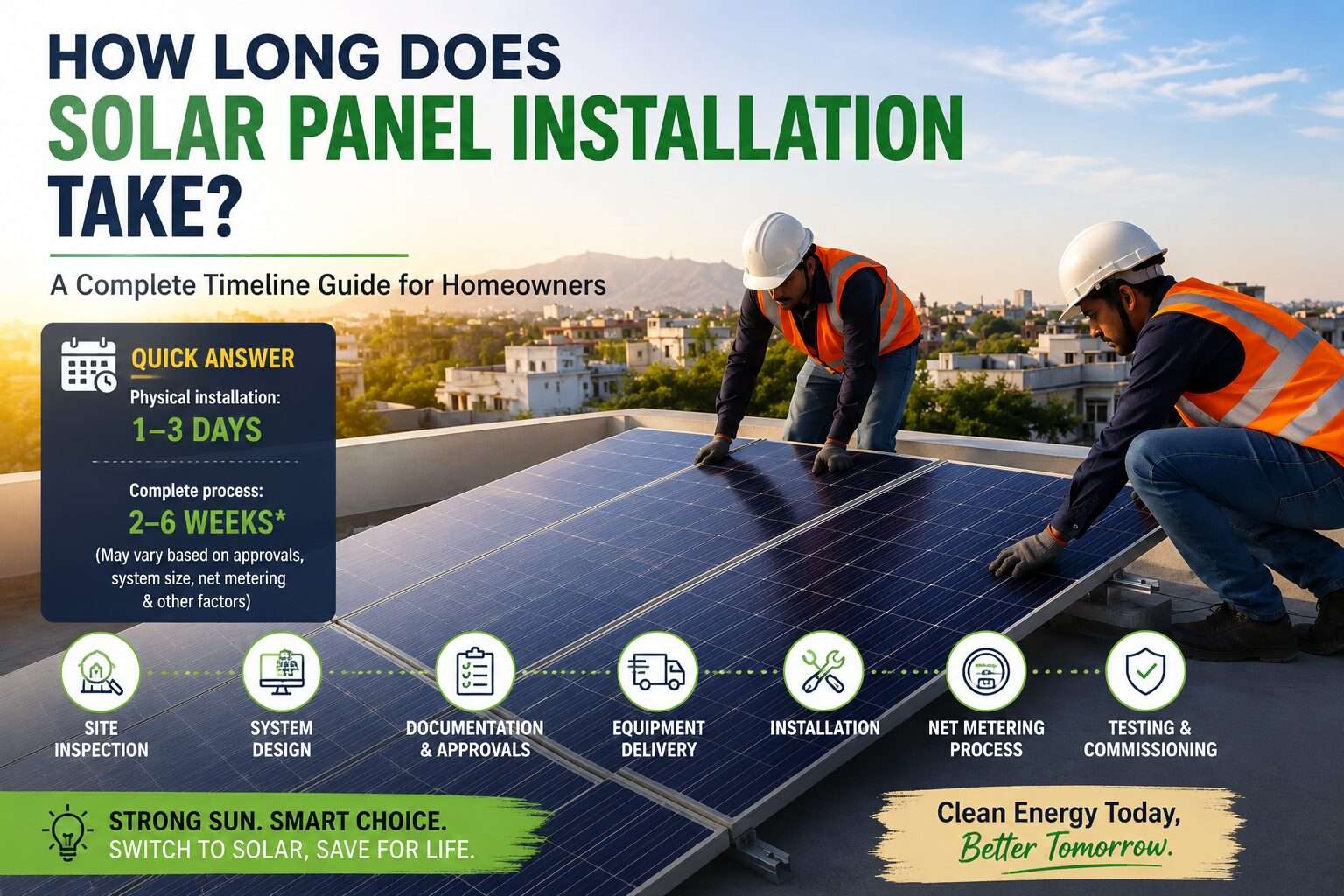
Quick Answer: How Long Does Solar Panel Installation Take?
For a typical residential rooftop solar project, the on-site installation may take around 1–3 days, depending on the system size and roof conditions. However, the complete journey from initial consultation to commissioning can take longer because it may include:
- Initial consultation and electricity-bill assessment
- Rooftop site inspection
- Solar system design
- Documentation and application
- Required approvals
- Equipment and installation scheduling
- Physical solar panel installation
- Electrical connections
- Net-metering process
- Testing and commissioning
So, if you are asking only about the physical work on your roof, it may take a few days. If you are asking about the entire solar installation process, the timeline can extend depending on approvals and project-specific requirements.
What Determines the Solar Installation Timeline?
There is no single installation timeline that applies to every home. Two houses in the same locality can have completely different installation requirements. Here are the major factors that can affect how long your project takes.
1. Solar System Size
The size of the solar system directly affects the amount of work involved.
A smaller residential system generally requires fewer panels, less mounting structure and fewer electrical connections. A larger system requires more equipment, wiring and installation work. For example, installing a small rooftop system on an easily accessible roof may be straightforward, while a larger system covering multiple roof sections can require additional planning.
This is why an installer should first assess your electricity consumption rather than simply recommending a system based on roof size.
2. Condition of Your Rooftop
Your roof plays an important role in determining installation time. Before installation, technicians need to check whether the roof is suitable for mounting solar panels. They may assess:
- Available installation area
- Roof strength and condition
- Shading from nearby buildings or trees
- Roof layout
- Water drainage
- Access for installation workers
- Suitable locations for the inverter and electrical equipment
If repairs, waterproofing or structural improvements are required, the project may take longer.
3. Accessibility of the Roof
A rooftop that is easy to access can make installation much simpler. However, some homes have narrow staircases, multiple floors, limited access points or roof layouts that make it difficult to transport panels and mounting equipment.
In such cases, installers may need additional time and manpower to safely move equipment to the rooftop.
4. Electrical Work
Solar installation is not only about mounting panels. The system also requires proper electrical connections between the solar panels, inverter, protection devices, existing electrical system and, where applicable, the grid connection.
The condition of the home’s existing electrical infrastructure can therefore influence the installation timeline. An experienced installer should inspect these requirements before beginning the actual work.
Solar Panel Installation Process: Step-by-Step Timeline
Understanding the individual stages can give homeowners a more realistic idea of how long the entire process may take.
Step 1: Initial Consultation
The process usually starts by understanding your electricity consumption and requirements.
Your recent electricity bills can help determine how much power your home typically uses. The installer may also discuss your budget, available rooftop area and expectations from the solar system. This stage helps avoid installing a system that is unnecessarily large or too small for your requirements.
Step 2: Rooftop Site Inspection
A physical site assessment is one of the most important stages.
The solar professional evaluates the rooftop for sunlight availability, shading, installation space, roof condition and accessibility. In Jaipur, this step is particularly useful because many rooftops have different layouts, water tanks, parapet walls and other structures that can affect panel placement.
Step 3: System Design
After the site inspection, the solar system can be designed according to the home’s requirements. The design may consider:
- Number of solar panels
- Panel orientation and placement
- Mounting structure
- Inverter capacity
- Cable routing
- Safety and protection equipment
- Available roof space
Good design is important because a technically poor installation can affect system performance even when high-quality panels are used.
Step 4: Documentation and Approvals
Depending on the project and applicable process, documentation and approvals may be required before the system can be connected to the electricity grid. This is one of the reasons the complete solar project timeline should not be confused with the physical installation time. Homeowners should ask their solar company clearly:
Which part of the process is handled by you, and which approvals or documents do I need to provide?
Clear communication at this stage can prevent unnecessary delays.
Step 5: Solar Panel Installation
Once the required preparations are complete, the physical installation begins. Technicians typically work on:
- Mounting structure installation
- Solar panel mounting
- DC cable connections
- Inverter installation
- Electrical protection equipment
- AC-side connections
- Earthing and safety-related work
- System testing
For many standard residential projects, the physical work can be completed within a few days, although the exact duration depends on the system and site.
Step 6: Testing and Commissioning
After installation, the system needs to be checked before it is put into operation. The installer should verify that the panels, inverter, wiring and safety components are functioning correctly.
Commissioning is important because the objective is not simply to finish the installation it is to ensure that the solar system is ready to operate safely and reliably.
Step 7: Net Metering and Grid Connection
For grid-connected rooftop systems, net metering can be an important part of the overall process.
The exact procedure and timeline depend on the applicable electricity distribution process and project requirements. This is another reason why a homeowner may see a difference between:
How long will installation take?
and How long until my complete solar system is operational?
Jaipur Specific Factors That Can Affect Installation Time
If you are planning solar panel installation in Jaipur, local rooftop conditions deserve particular attention. Jaipur receives strong sunlight, making rooftop solar an attractive option for many homeowners. But good solar potential does not mean every rooftop installation is identical.
Summer Heat
Jaipur’s summer temperatures can be extremely high. Installation teams may need to plan physical rooftop work carefully to maintain worker safety and installation quality.
Dust and Rooftop Conditions
Dust is a practical consideration for Rajasthan rooftops. During the site assessment, installers should consider the condition of the roof and the future maintenance requirements of the solar panels.
Roof Accessibility
Many Jaipur homes have multi-level construction, water tanks and other rooftop structures. These can influence panel placement and the time required to move equipment safely.
Shading
Nearby buildings, trees, parapet walls and rooftop structures can create shadows during different parts of the day. A proper site assessment should identify these issues before the final system design.
Local Documentation and Grid Requirements
The overall project timeline may also depend on documentation, electricity connection requirements and the applicable net-metering process.
For this reason, homeowners should avoid choosing a company based only on the promise of the fastest installation.
Jaipur Mein Solar Lagwane Ka Process Kitne Din Leta Hai?
Jaipur mein solar lagwane ka process kitne din leta hai?
A simple answer is: the physical rooftop installation may take around 1–3 days for a typical residential project, but the complete process can take longer because site inspection, system design, documentation, approvals, net metering and commissioning may happen at different stages.
The exact timeline depends on your home and project. Instead of asking only, Kitne din mein solar lag jayega? , ask your installer for a stage-wise timeline. For example:
- Site inspection: When will it happen?
- System design: When will I receive it?
- Documentation: Who will handle it?
- Installation: How many working days?
- Testing: When will it be completed?
- Net metering: What is the applicable process?
- Commissioning: When will the system be ready?
This gives you a much clearer picture of the project.
Why an Experienced Solar Installation Company Matters
Solar panels are a long-term investment. The quality of installation can be just as important as the equipment selected. An experienced solar installation company should be able to help with more than simply mounting panels. Look for a company that provides:
Proper Site Assessment
A detailed rooftop assessment helps identify shading, roof accessibility, installation space and other practical issues before work begins.
Correct System Design
The system should be designed around your electricity consumption, rooftop conditions and requirements rather than using a one-size-fits-all approach.
Electrical Safety
Proper wiring, earthing, protection devices and installation practices are essential for a safe solar system.
Documentation Support
Homeowners can find the paperwork and grid-related process confusing. A professional solar company should clearly explain the documentation required and provide appropriate support.
After-Sales Support
Solar is a long-term investment. Ask about maintenance, troubleshooting and support after installation not just the installation date.
For homeowners considering solar panel installation in Jaipur, Agrawal Solar Energy LLP can be considered when comparing local installation providers. The important point is to evaluate the company on installation quality, technical guidance, documentation support and long-term service rather than focusing only on installation speed.
What Can Homeowners Do to Avoid Delays?
You can make the process smoother by preparing a few things in advance.
Keep Your Electricity Bills Ready
Recent bills can help the installer understand your electricity consumption and recommend an appropriate system.
Make Sure the Roof Is Accessible
Clear unnecessary obstacles from the installation area where possible.
Discuss Roof Repairs Before Installation
If the roof needs repairs or waterproofing, discuss them before mounting the solar structure.
Ask About the Complete Timeline
Do not ask only about the installation day. Ask for the expected timeline from site inspection to commissioning.
Clarify Net-Metering Responsibilities
Ask who will handle the required process and documentation.
Discuss Future Maintenance
Ask how the panels should be cleaned and what type of after-sales support is available.
These small steps can reduce confusion and help the project move more smoothly.
Is Faster Solar Installation Always Better?
Not necessarily. A solar installation should be completed efficiently, but speed should never come at the expense of safety or workmanship. A rushed installation can potentially lead to problems such as:
- Poor cable management
- Incorrect panel placement
- Inadequate electrical protection
- Improper mounting
- Weak documentation
- Insufficient testing
The better question is not: Who can install solar the fastest?
It is: Who can complete my solar installation correctly, safely and with proper support?
A few additional hours spent on proper inspection and testing can be far more valuable than simply finishing the rooftop work as quickly as possible.
Frequently Asked Questions
How long does solar panel installation take for a house?
The physical installation for a typical residential rooftop system may take around 13 days. The complete project timeline can be longer because it may include inspection, documentation, approvals, net metering and commissioning.
Can solar panels be installed in one day?
Some smaller and straightforward projects may have the physical installation completed quickly, potentially within a day. However, homeowners should not assume that the entire solar process including approvals and commissioning will be completed in one day.
Does a 5kW solar system take longer to install?
Installation time depends on the rooftop layout, accessibility, equipment and installation complexity, not just system capacity. A 5kW system on a simple rooftop may be easier to install than a smaller system on a difficult roof.
What causes delays in solar installation?
Common factors can include roof repairs, difficult rooftop access, system design changes, documentation, approvals, electricity connection requirements, net-metering procedures and project-specific technical requirements.
How can I speed up my solar installation?
Providing required documents promptly, keeping the rooftop accessible, completing necessary roof repairs beforehand and choosing an experienced installer can help reduce avoidable delays.
Final Thoughts
So, how long does solar panel installation take?
For many residential projects, the physical rooftop work can be completed within a few days. But the complete journey from site inspection and design to documentation, approvals, installation, net metering and commissioning can take longer.
If you are planning solar for your home in Jaipur, focus on getting the right system, proper rooftop assessment, safe installation and reliable after-sales support rather than choosing an installer only because they promise the fastest installation.
A professional solar company should give you a realistic timeline based on your actual home and explain each stage clearly.
If you are considering solar panel installation in Jaipur, start with a proper site assessment and electricity-consumption analysis. That is the best way to understand both the system you need and the realistic timeline for getting it operational.