
Monsoon Solar Maintenance Guide: Protect Your Solar System During the Rainy Season
Table of Contents
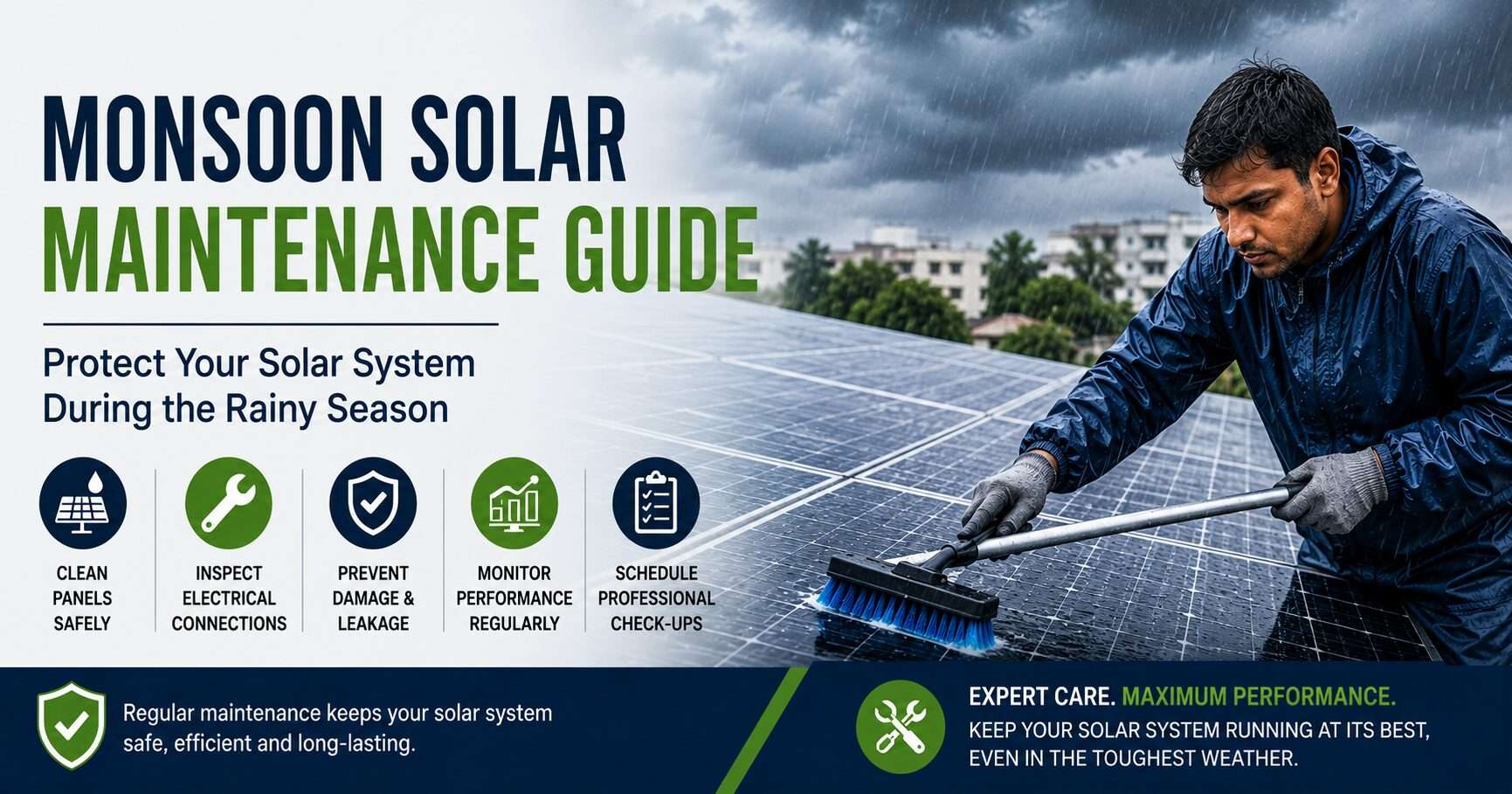
The monsoon season brings welcome relief from Rajasthan’s intense summer heat, but it also creates new challenges for rooftop solar systems. Heavy rainfall, humidity, dust accumulation, water seepage, and strong winds can affect the performance and long-term reliability of your solar installation if proper care is ignored. Many homeowners spend time researching Jaipur me solar lagvane ka kharcha, comparing system sizes, subsidies, and installation costs. However, one equally important factor that often gets overlooked is regular maintenance after installation.
A well-maintained solar system not only generates more electricity but also lasts longer and reduces the chances of unexpected breakdowns. This Solar Maintenance Guide will help homeowners and businesses understand how the rainy season affects solar panels, what precautions should be taken, and when professional servicing becomes necessary. Whether you own a residential rooftop system or a commercial solar plant, following these practical maintenance tips will help you protect your investment and maximize energy savings throughout the monsoon.
Why Solar Maintenance Matters During Monsoon
Solar panels are designed to withstand rain, heat, and changing weather conditions. However, being weather-resistant does not mean they are maintenance-free. During the monsoon season, continuous exposure to moisture, dust, bird droppings, falling leaves, and fluctuating temperatures can gradually impact the overall health of your solar system. Rainwater may wash away loose dust, but it cannot remove stubborn dirt, pollen, industrial pollution, or bird waste. These deposits create shaded spots on solar panels, reducing sunlight absorption and lowering electricity generation. Moisture is another concern. Water entering loose electrical connections, damaged conduit pipes, or poorly sealed junction boxes can lead to electrical faults and reduce system safety. Windstorms may also loosen mounting structures or bring nearby branches into contact with the panels.
Regular Solar Panel Maintenance ensures these issues are detected early before they turn into costly repairs. A seasonal inspection also improves Solar Panel Efficiency, protects system components, and helps maintain warranty conditions recommended by manufacturers. For homeowners in Jaipur and across Rajasthan, where weather changes rapidly during monsoon, preventive maintenance is always more economical than emergency repairs.
How Rainy Weather Impacts Solar Panel Performance
Many people assume that rain completely cleans solar panels and improves their performance. While rainfall helps remove loose dust, it cannot replace professional Solar Panel Cleaning or periodic inspections. Some common monsoon-related factors affecting Solar Panel Performance include:
Reduced Sunlight Availability
Cloudy skies naturally reduce solar radiation. Even if your panels are functioning perfectly, electricity production may temporarily decrease during extended cloudy days.
Dirt Build-up
Rain often mixes with airborne dust, creating a thin layer of mud on the glass surface. Once dried, this layer blocks sunlight and lowers energy production.
Humidity Effects
High humidity may encourage corrosion around exposed metal components if regular Solar System Maintenance is ignored.
Water Seepage
Damaged cable glands, cracked junction boxes, or improper sealing can allow moisture to enter electrical components.
Strong Winds
Heavy storms may loosen mounting bolts or shift improperly secured panels. Loose structures can reduce system stability and become a safety concern.
Falling Leaves
Leaves and branches accumulating beneath or around panels can obstruct drainage and create moisture retention, increasing the possibility of corrosion over time. These factors highlight why routine Solar System Inspection during monsoon is an essential part of responsible solar ownership.
Top 10 Monsoon Solar Maintenance Tips
1. Clean Solar Panels Safely
Rainwater alone cannot completely clean solar panels. Bird droppings, pollen, tree sap, and pollution often remain on the glass surface, reducing sunlight absorption. Always use clean water and a soft microfiber cloth or sponge. Avoid abrasive brushes, detergents, or harsh chemicals that may damage the anti-reflective coating. If your rooftop is steep or difficult to access, hire professional Solar Cleaning Services instead of attempting risky cleaning yourself.
Expert Tip: Clean panels early in the morning or late evening when the glass surface is cool.
2. Inspect Mounting Structures
Heavy winds during monsoon can gradually loosen mounting bolts and support structures. Check for:
- Loose fasteners
- Rust formation
- Bent brackets
- Unusual panel movement
A stable mounting structure protects both the solar panels and your roof from long-term damage. Professional Solar Panel Inspection helps identify structural issues before they become expensive repairs.
3. Check Electrical Connections
Electrical safety should always be a priority during rainy weather. Inspect:
- Cable insulation
- Junction boxes
- MC4 connectors
- Conduit pipes
Never touch exposed electrical components during rainfall. If you notice damaged wiring, moisture inside electrical boxes, or unusual inverter alerts, immediately schedule Solar Maintenance Services.
4. Inspect Earthing System
Proper earthing protects your solar system from electrical faults and lightning-related risks. During monsoon, ensure:
- Earthing wires remain intact
- Ground connections are secure
- Corrosion is not visible
- Lightning protection systems are functioning correctly
Ignoring earthing problems may increase equipment damage during thunderstorms.
5. Monitor Inverter Performance
The inverter is the brain of your solar system. Regularly monitor:
- Error messages
- Daily energy generation
- Voltage fluctuations
- Warning indicators
Modern inverters provide mobile app monitoring, making it easier to detect performance issues before they become serious. A sudden drop in electricity generation often indicates the need for Solar Inverter Inspection.
6. Look for Water Leakage
Although solar panels are waterproof, poor installation or aging components may allow water to enter cable entry points or junction boxes. Inspect your rooftop for:
- Water seepage
- Damp walls
- Roof cracks
- Wet electrical conduits
Timely repairs prevent long-term structural damage and improve overall system reliability.
7. Trim Nearby Trees
Tree branches may cast shadows, drop leaves, or even strike panels during strong winds. Seasonal trimming helps:
- Increase sunlight exposure
- Reduce debris accumulation
- Improve panel safety
- Maintain higher Solar Panel Efficiency
This simple maintenance step often results in noticeable improvements in energy production.
8. Watch Daily Energy Generation
One of the easiest maintenance practices is simply checking your daily generation data. Compare current production with previous weeks while considering weather conditions. A gradual decline despite similar sunlight conditions may indicate:
- Dirty panels
- Loose wiring
- Inverter issues
- Panel degradation
Routine monitoring supports better Solar Performance Check and early fault detection.
9. Schedule Professional Inspection
Even if your system appears to be working normally, an annual professional inspection is highly recommended. Experienced technicians can inspect:
- Solar modules
- Wiring
- Earthing
- Mounting structures
- Inverter performance
- Safety compliance
Professional Solar Maintenance Jaipur services help identify hidden issues before they impact electricity generation.
10. Maintain Service Records
Many homeowners ignore maintenance documentation. Keep records of:
- Cleaning dates
- Inspection reports
- Repairs completed
- Energy generation trends
- Warranty documents
These records simplify future servicing and help technicians diagnose recurring issues more efficiently.
Solar Panel Cleaning During Monsoon: Myths vs Facts
| Myth | Fact |
|---|---|
| Rain completely cleans solar panels. | Rain removes loose dust but cannot eliminate bird droppings, mud stains, or sticky dirt. |
| Solar panels don’t require maintenance during monsoon. | Regular Solar Panel Maintenance is essential for safety and consistent performance. |
| Cleaning with detergent gives better results. | Only clean water and soft tools should be used to avoid damaging the panel coating. |
| Cloudy weather means maintenance is unnecessary. | Monsoon is actually one of the most important seasons for inspection and preventive maintenance. |
| Any local cleaner can service a solar system. | Solar systems should be inspected by trained professionals familiar with electrical safety and manufacturer guidelines. |
Signs Your Solar System Needs Immediate Maintenance
Ignoring early warning signs can reduce electricity generation and increase repair costs. Contact a professional if you notice any of the following:
- Sudden drop in daily power generation
- Inverter showing warning or fault codes
- Water leakage near electrical components
- Loose mounting structures after heavy winds
- Visible cracks or damage on solar panels
- Corroded wiring or exposed cables
- Frequent tripping of the system
- Unusual noises from the inverter
- Excessive dirt, moss, or bird droppings that remain after rainfall
- Physical damage caused by falling branches or storm debris
A timely Solar System Health Check can prevent these minor issues from developing into expensive repairs and help maintain the long-term performance of your solar investment.
Common Solar Problems During the Rainy Season Monsoon brings changes in weather conditions that can directly impact solar system performance. While quality solar panels are designed to handle different climates, regular monitoring and timely Solar System Maintenance help prevent small issues from becoming major problems.
Below are some common problems faced by residential and commercial solar systems during the rainy season:
| Problem | Possible Cause | Recommended Solution |
|---|---|---|
| Reduced electricity generation | Dust layer, water stains, bird droppings, cloudy weather | Perform proper Solar Panel Cleaning and check system performance |
| Inverter errors | Moisture exposure, voltage fluctuations, internal faults | Schedule Solar Inverter Inspection and professional diagnosis |
| Loose solar panel structure | Heavy winds, vibration, weak mounting points | Inspect mounting bolts and repair damaged structures |
| Water leakage near cables | Damaged cable glands, poor sealing, aging components | Check wiring protection and improve waterproofing |
| Corrosion on metal parts | Continuous moisture exposure and poor maintenance | Conduct regular inspection and replace affected parts |
| Damaged wiring | Rodents, weather exposure, physical damage | Perform Solar Wiring Inspection and replace unsafe cables |
| Low panel efficiency | Dirt accumulation and shading from trees | Clean panels and remove surrounding obstacles |
| Earthing issues | Loose connections or corrosion in grounding system | Test earthing system for electrical safety |
A regular Solar Performance Check during and after monsoon helps maintain reliable energy generation and protects your solar investment.
DIY Maintenance vs Professional Solar Maintenance Services
Many homeowners try to handle basic solar cleaning and inspection themselves. While simple tasks like checking generation data can be done safely, electrical inspections and technical repairs require trained professionals.
Understanding the difference between DIY maintenance and professional service helps you choose the right approach.
| DIY Maintenance | Professional Solar Maintenance Services |
|---|---|
| Checking inverter display and mobile monitoring app | Complete solar system inspection |
| Removing visible leaves from accessible areas | Professional panel cleaning with proper equipment |
| Monitoring electricity generation | Detailed performance analysis |
| Checking visible dirt or shading issues | Electrical testing and wiring inspection |
| Maintaining basic records | Complete maintenance reports |
| Suitable for basic monitoring | Required for safety, repairs, and technical issues |
For systems installed in Jaipur and other parts of Rajasthan, professional Solar Maintenance Jaipur services are recommended at regular intervals because extreme heat, dust, and monsoon conditions can affect system performance throughout the year.
Agrawal Solar Energy LLP focuses on preventive maintenance rather than waiting for complete system failure. Regular servicing helps identify hidden problems and improves the overall life of your solar installation.
How Often Should Solar Panels Be Inspected?
The inspection frequency depends on the system size, location, surrounding environment, and weather conditions.
For most residential solar systems, a professional inspection should be done at least once every year. However, areas with high dust levels, frequent storms, or nearby trees may require more frequent checks. A recommended schedule includes:
Before Monsoon
A pre-monsoon inspection helps identify issues before heavy rainfall starts. Technicians generally check:
- Panel condition
- Mounting structure
- Cable connections
- Inverter health
- Earthing system
- Waterproofing
During Monsoon
Regular monitoring is important during rainy months. Homeowners should observe:
- Sudden reduction in power generation
- Inverter alerts
- Water accumulation
- Physical damage after storms
After Monsoon
A post-monsoon inspection ensures your system has not suffered hidden damage. It includes:
- Panel cleaning
- Wiring inspection
- Structural checking
- Performance analysis
A proper Solar Maintenance Checklist followed throughout the year keeps your system efficient and reliable.
Benefits of Annual Solar Maintenance
Regular maintenance is not just about cleaning panels. It is a complete approach to protecting your solar investment.
1. Improved Solar Panel Efficiency
Dust, dirt, and minor technical problems can reduce electricity generation. Regular maintenance ensures panels receive maximum sunlight and continue producing optimal power.
2. Longer System Life
Solar panels can last 25 years or more, but proper care helps other components like inverters, cables, and mounting structures perform efficiently for longer.
3. Early Detection of Problems
Small issues such as loose wiring or minor water damage can become expensive repairs if ignored.
Regular inspections identify problems before they affect your complete system.
4. Better Energy Savings
A properly maintained solar system generates more electricity, helping homeowners maximize savings on electricity bills.
5. Improved Safety
Electrical faults, damaged cables, and poor earthing can create safety risks. Professional maintenance ensures your system operates safely.
6. Warranty Protection
Many manufacturers recommend regular servicing to maintain warranty support. Keeping service records can be helpful during warranty claims.
Solar Maintenance Checklist
Use this checklist to keep your solar system healthy during monsoon and throughout the year.
| Maintenance Task | Recommended Frequency |
|---|---|
| Check solar generation performance | Weekly |
| Monitor inverter alerts | Weekly |
| Remove visible leaves and debris | Monthly or when required |
| Clean solar panels | Based on dust accumulation |
| Inspect wiring connections | Every 6–12 months |
| Check mounting structure | Before and after monsoon |
| Inspect earthing system | Annually |
| Check inverter performance | Annually |
| Professional solar inspection | At least once a year |
| Maintain service records | After every maintenance activity |
Following this simple Solar Maintenance Checklist can improve system reliability and reduce unexpected repair expenses.
Mistakes to Avoid During Monsoon
Many solar owners unintentionally make mistakes that can affect performance and safety. Avoid these common errors:
Ignoring Regular Inspections
Waiting until electricity generation drops significantly can increase repair costs. Preventive checks are always more effective.
Assuming Rain Cleans Everything
Rain removes surface dust but does not eliminate stubborn dirt, bird droppings, and stains.
Cleaning Panels with Harsh Materials
Using hard brushes or chemical cleaners can damage the protective layer of solar panels.
Walking Directly on Solar Panels
Solar modules are strong but not designed for walking. Pressure can create invisible cracks and reduce efficiency.
Ignoring Inverter Warnings
Small inverter alerts should not be ignored. They often indicate issues requiring attention.
Delaying Wirin1g Repairs
Damaged cables can become dangerous, especially during wet weather conditions.
Hiring Untrained Technicians
Solar systems involve electrical components. Always choose experienced professionals for inspection and repair work.
Why Choose Agrawal Solar Energy LLP for Solar Maintenance?
A solar system is a long-term investment, and proper maintenance plays an important role in protecting its performance. Agrawal Solar Energy LLP provides reliable solar maintenance solutions designed to keep residential and commercial solar systems operating efficiently. With practical experience in solar installations, the company understands the challenges faced by solar owners in Jaipur and Rajasthan, including dust accumulation, extreme temperatures, and monsoon-related issues.
The professional maintenance approach includes:
Professional Solar Panel Inspection
Detailed inspection helps identify performance issues, physical damage, loose connections, and safety concerns before they become major problems.
Solar Panel Cleaning Services
Proper cleaning methods help remove dust, stains, and debris while protecting the panel surface.
Preventive Maintenance
Regular maintenance reduces unexpected breakdowns and helps improve overall system reliability.
Inverter and Electrical Diagnostics
Technicians check inverter performance, wiring conditions, and electrical connections to ensure safe operation.
Solar Performance Monitoring
Performance analysis helps identify unusual drops in electricity generation and improves energy output.
Customer Support
Agrawal Solar Energy LLP focuses on providing dependable service support and solutions according to customer requirements. Whether you have a residential rooftop system or a commercial solar installation, professional Solar Maintenance Services help you achieve better performance, safety, and long-term savings.
Conclusion
Installing a solar system is only the first step toward energy independence. Regular care and timely inspections are equally important to maintain efficiency and protect your investment.
During monsoon, moisture, dust, wind, and changing weather conditions can affect solar performance if maintenance is ignored. Following this Solar Maintenance Guide and scheduling professional inspections can help your system continue generating clean energy efficiently.
For reliable Solar Maintenance Services in Jaipur, contact Agrawal Solar Energy LLP. Our experienced team can help with solar inspection, cleaning, performance checks, and preventive maintenance to keep your solar system healthy throughout the year.
Choose professional care today and ensure your solar investment delivers maximum benefits for years to come.