Ultimate Beginner’s Guide to Residential Solar: Everything You Need to Know in 2026
Table of Contents
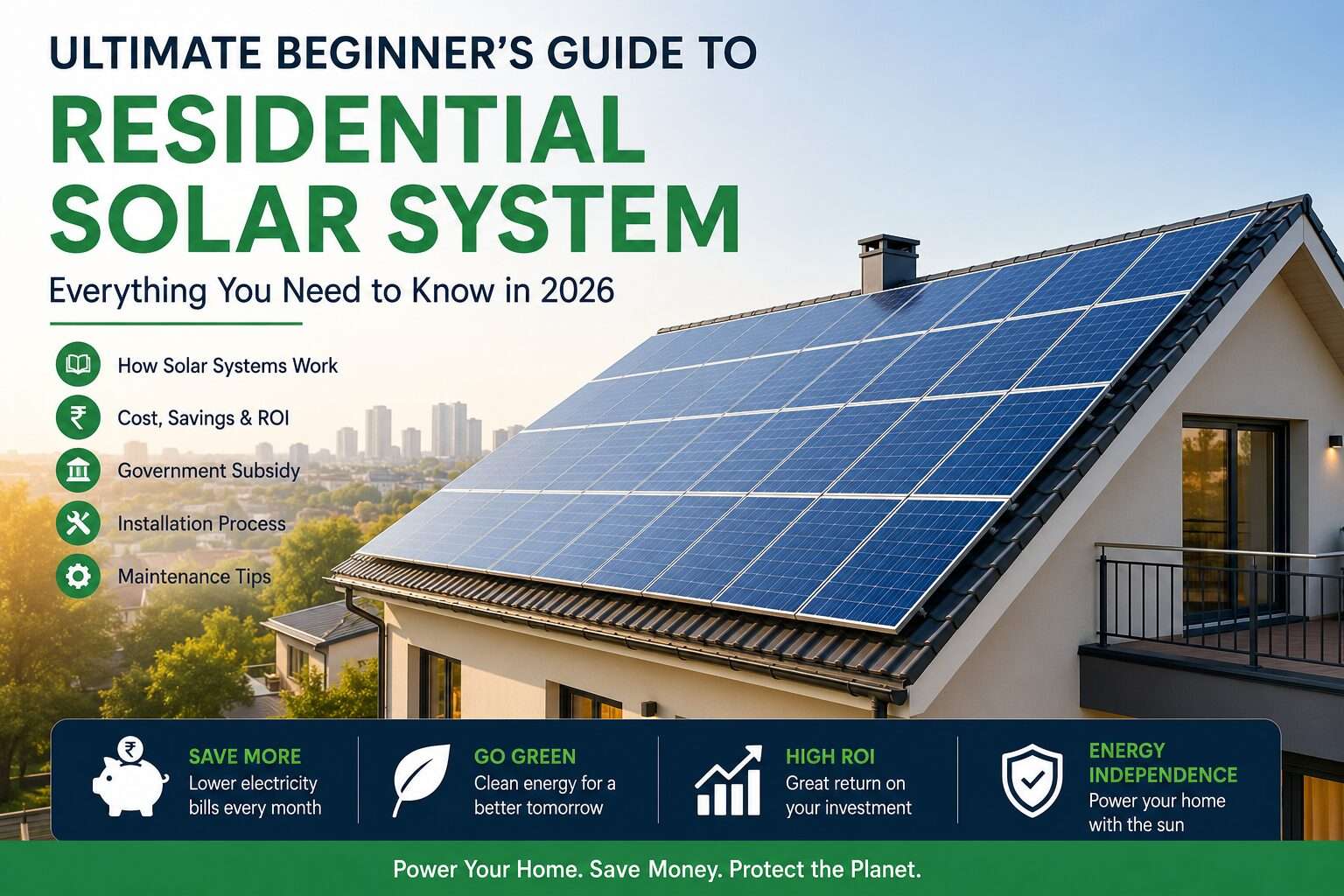
The demand for a Residential Solar System is growing faster than ever in 2026. Rising electricity prices, improved government subsidies, and growing environmental awareness have encouraged thousands of homeowners to switch to solar energy. Today, a residential solar setup is no longer considered a luxury it has become a smart long-term investment. Whether you are planning to reduce your electricity bills, increase your property’s value, or contribute to a cleaner environment, installing Solar Panels for Home is one of the best decisions you can make.
If you are completely new to solar, this Home Solar System Guide will explain everything in simple language from how residential solar works to installation, costs, government subsidies, maintenance, and common mistakes to avoid. At Agrawal Solar Energy LLP, we have helped homeowners understand and adopt reliable solar solutions with quality products and professional installation. This guide combines practical knowledge with industry experience to help you make an informed decision.
Why Residential Solar Is Becoming So Popular in 2026
Electricity consumption in Indian homes continues to increase because of air conditioners, electric vehicles, smart appliances, and work-from-home lifestyles. At the same time, electricity tariffs continue to rise.
A Residential Solar System allows homeowners to generate their own electricity directly from sunlight, reducing dependence on the power grid and significantly lowering monthly bills. Some major reasons behind the growing popularity include:
- Higher electricity savings
- Government subsidy benefits
- Faster return on investment
- Increased property value
- Low maintenance requirements
- Environment-friendly energy production
- Improved solar technology
Many homeowners now consider solar an essential home improvement rather than an optional upgrade.
What Is a Residential Solar System?
A Residential Solar System is a rooftop power generation system designed specifically for homes. It converts sunlight into usable electricity using photovoltaic (PV) solar panels. The electricity generated can be:
- Used immediately inside the home
- Exported to the electricity grid through net metering
- Stored in batteries (depending on the system type)
A typical residential system consists of:
- Solar Panels
- Solar Inverter
- Mounting Structure
- DC & AC Cables
- Safety Devices
- Net Meter (for on-grid systems)
Together, these components provide clean and reliable Solar Energy for Home.
How Does a Residential Solar System Work?
The working process is simple:
Step 1: Solar Panels Capture Sunlight
Solar panels absorb sunlight throughout the day.
Step 2: Electricity Is Generated
The panels produce Direct Current (DC) electricity.
Step 3: Inverter Converts Power
The solar inverter converts DC electricity into AC electricity that your home appliances can use.
Step 4: Power Your Home
Generated electricity runs lights, fans, air conditioners, refrigerators, televisions, washing machines, and other appliances.
Step 5: Extra Electricity Is Sent to the Grid
With net metering, excess electricity generated during the day is exported to the grid, earning energy credits that reduce future electricity bills.
Types of Residential Solar Systems
On-Grid Solar System
This is the most popular choice for urban homes. Advantages:
- Lower installation cost
- Government subsidy available
- Net metering benefits
- Maximum electricity savings
Best for homeowners with reliable electricity supply.
Off-Grid Solar System
An off-grid system operates independently without electricity from the utility grid. Advantages:
- Complete energy independence
- Suitable for remote areas
- Battery backup included
Best for locations with frequent power outages.
Hybrid Solar System
A hybrid system combines the benefits of both on-grid and battery storage. Advantages:
- Grid connectivity
- Battery backup
- Better energy management
Ideal for homeowners seeking uninterrupted power supply.
Is Your Home Suitable for Solar?
Before investing in a Residential Solar Installation, consider the following:
Roof Space :- A shadow-free rooftop provides the best results.
Roof Strength :- The roof should be structurally capable of supporting solar panels for over 25 years.
Sunlight Availability :- Homes receiving 5–6 hours of direct sunlight daily perform exceptionally well.
Monthly Electricity Bill :- Homes paying higher electricity bills generally achieve faster returns on investment.
How Much Does a Residential Solar System Cost?
One of the first questions homeowners ask is about the Solar System Cost. The final price depends on:
- System capacity
- Panel quality
- Inverter brand
- Roof type
- Installation complexity
- Location
- Government subsidy
Instead of focusing only on the initial investment, consider:
- Lifetime savings
- Reduced electricity bills
- Return on investment
- Long system lifespan
- Property value appreciation
For most homeowners, solar pays for itself over time while continuing to generate free electricity for many years.
Government Subsidy for Residential Solar
The Indian Government continues to encourage rooftop solar adoption through subsidy schemes. Eligible homeowners can benefit from financial assistance under approved residential rooftop solar programs. Benefits include:
- Lower installation cost
- Faster ROI
- Greater affordability
- Encouragement for clean energy adoption
Always choose an authorized solar installer who understands the latest subsidy process and documentation requirements.
Understanding Net Metering
Net metering is one of the biggest advantages of an on-grid residential solar system. Here’s how it works:
- Your home uses solar electricity during the day.
- Excess electricity is exported to the grid.
- You receive energy credits.
- These credits reduce your future electricity bills.
This significantly improves long-term savings.
Benefits of Installing Solar Panels for Home
Installing Solar Panels for Home offers benefits far beyond lower electricity bills.
Significant Savings :-Generate your own electricity and reduce monthly expenses.
Long Equipment Life : –Quality solar panels can last 25 years or more.
Minimal Maintenance :- Regular cleaning and periodic inspections are usually enough.
Environment-Friendly :- Solar energy produces no harmful emissions during electricity generation.
Increased Property Value :- Energy-efficient homes often attract more buyers.
Protection Against Rising Electricity Prices :- Generate your own electricity instead of depending entirely on utility rates.
Common Mistakes Beginners Should Avoid
Many homeowners make avoidable mistakes during their first solar purchase.
Choosing the Cheapest Installer
Low prices often compromise quality.Always prioritize experience, certifications, and after-sales support.
Ignoring Product Quality
Invest in trusted solar panels, inverters, and mounting structures. Cheap equipment may reduce long-term performance.
Not Understanding Warranty
Check both:
- Product Warranty
- Performance Warranty
Installing Incorrect System Size
An undersized system may not meet your electricity needs, while an oversized system may increase unnecessary investment.
Ignoring Future Electricity Usage
Consider future additions like:
- Air conditioners
- Electric vehicles
- Water heaters
- Home expansion
Residential Solar Installation Process
Professional Residential Solar Installation generally follows these steps:
Site Inspection
Engineers inspect your rooftop and electricity consumption.
System Design
A customized solar system is designed according to your energy needs.
Documentation
Required approvals and subsidy-related paperwork are completed.
Installation
Panels, inverter, wiring, and safety equipment are installed.
Testing
The system is tested for performance and safety.
Net Meter Connection
The utility company installs the net meter.
System Activation
Your home begins generating clean electricity.
How to Maintain a Residential Solar System
Solar maintenance is simple. Follow these tips:
- Clean panels regularly.
- Remove dust and bird droppings.
- Trim nearby trees creating shade.
- Monitor inverter performance.
- Schedule annual inspections.
- Avoid walking directly on panels.
Proper maintenance helps maintain high energy production.
How to Choose the Right Solar Company
Choosing the right installer is just as important as selecting the right equipment. Look for:
- Industry experience
- Certified installation team
- High-quality products
- Genuine warranties
- Transparent pricing
- Strong customer reviews
- Reliable after-sales service
A professional solar company will guide you from consultation to installation and long-term support.
Residential Solar in Jaipur
Homeowners in Jaipur are increasingly adopting rooftop solar because the city receives excellent sunlight throughout the year. If you are researching local solar solutions, you may also come across these popular searches: Jaipur में Solar Panel लगवाने का पूरा खर्च Many homeowners want to understand the complete installation cost before making a decision. The actual investment depends on system size, roof conditions, equipment quality, and applicable government subsidies.
You may also have seen headlines like: ₹0 Electricity Bill? Install Solar System in Jaipur Today While the exact savings depend on your electricity usage and system capacity, a properly designed residential solar system can significantly reduce your monthly electricity expenses.
Another frequently searched topic is: Solar Panel Installation in Jaipur: Save Lakhs with Government Subsidy Government-approved subsidy programs can substantially lower the upfront cost for eligible residential consumers, making rooftop solar more affordable than ever.
Why Choose Agrawal Solar Energy LLP?
When investing in a Residential Solar System, experience and service quality matter. Agrawal Solar Energy LLP is committed to helping homeowners make confident solar decisions through:
- Expert consultation
- Customized residential solar solutions
- Premium-quality solar products
- Professional installation
- Transparent pricing
- Government subsidy assistance
- Reliable after-sales support
Our focus is not just on installing solar panels but on delivering long-term energy savings and customer satisfaction.
Final Thoughts
A Residential Solar System is one of the smartest investments homeowners can make in 2026. It helps reduce electricity bills, protects against rising energy costs, increases property value, and contributes to a cleaner environment. Working with an experienced installer ensures your system is properly designed, safely installed, and delivers maximum performance for decades.
If you’re planning to switch to solar, now is the perfect time to begin your journey toward energy independence. Looking for a reliable partner for your Residential Solar Installation? Agrawal Solar Energy LLP provides professional consultation, customized system design, high-quality solar products, government subsidy assistance, and expert installation services tailored to your home’s energy needs.
Contact our team today to schedule a free consultation and discover how a Residential Solar System can help you save on electricity while investing in a cleaner, more sustainable future.